

The central issue in my Samuel plush AliExpress dispute was who had to pay to send a defective item back. My order page listed the seller as the return-shipping fee bearer. Then AliExpress changed the return to self-shipping and instructed me to pay the postage upfront, with reimbursement subject to a later decision.
I did not want to take that financial risk. In a separate shoe return, I had already run into objections to the shipping evidence I provided. The shoes had been returned, and the merchandise refund was a separate matter from the return-postage reimbursement. I regarded the objections to my shipping evidence as excuses for not honoring the return-shipping promise. That experience made me unwilling to advance another shipping charge for Samuel.
This is my experience with one Samuel 1000% blind-box plush order. The saved order page, listing, condition photographs, supplementary video and correspondence establish the story below. The shoe return provides context for my concern; it is a different order with a separate dispute.
Correction — September 25, 2026: An earlier version presented package measurements as carrier-verified. That attribution could not be independently established, so the measurement claim, comparison and carrier exhibit have been removed. The item-condition account, correspondence timeline and my September 23 no-refund and repair update remain.
Disclosure: This article documents my own purchase and dispute. It contains no affiliate links or paid placement. Public exhibits are permanently cropped copies; private originals, account details and correspondence links remain unpublished.
What I ordered, and what the saved listing says
The order record identifies a Samuel 1000% intelligent plush blind box, with the selection recorded as “Random 1 pc.” The matching saved product listing says the blind box is independently sealed and packaged. It also warns that packaging can be deformed in transit and asks buyers to record the unpacking.
That saved listing supports the sealed-packaging description. It is not a certified snapshot of every word displayed at checkout. I am also leaving the purchase price out: the records show several different totals and currencies, and a later listing price is not what I paid.

The condition concerns I documented
In my July correspondence, I reported that the plush arrived broken, the collectible packaging was already open and unsealed, the charging cable was missing, and paperwork was loose inside the shipping box. Those are my contemporaneous reports of what I received.
The photographs show the opened packaging and close views of the plush’s electronic unit, wiring and ribbon cable. They document the visible condition; they are not a technical diagnosis of which component failed. A photograph also cannot conclusively establish that an accessory was absent from the entire shipment. The missing charging cable is therefore presented as my documented report.
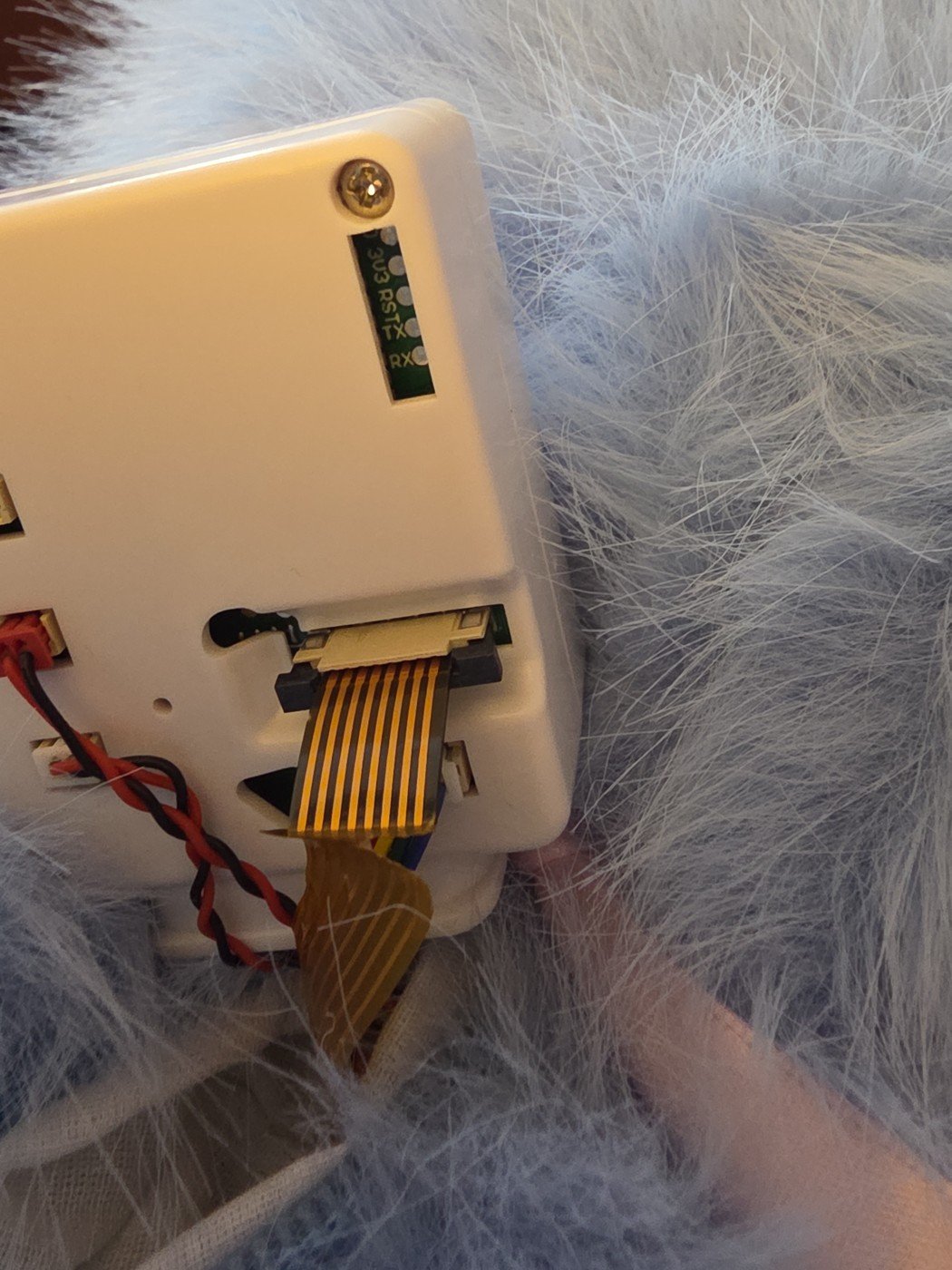
I also supplied a link to supplementary photographs and video in my July 25 email. I explicitly said the video was not an original unboxing recording. The recovered clips show close-ups of the packaging seal and the plush outside the packaging. I am not using them to reconstruct an opening they do not record, and I am not claiming the plush had previously been used.
From seller-paid return shipping to paying upfront myself
My saved order page says “Shipping Fee Bearer: seller.” That was the basis for my understanding that return shipping was the seller’s responsibility. I was seeking a return of merchandise I had reported as broken, open and incomplete—not volunteering to pay another shipping bill.
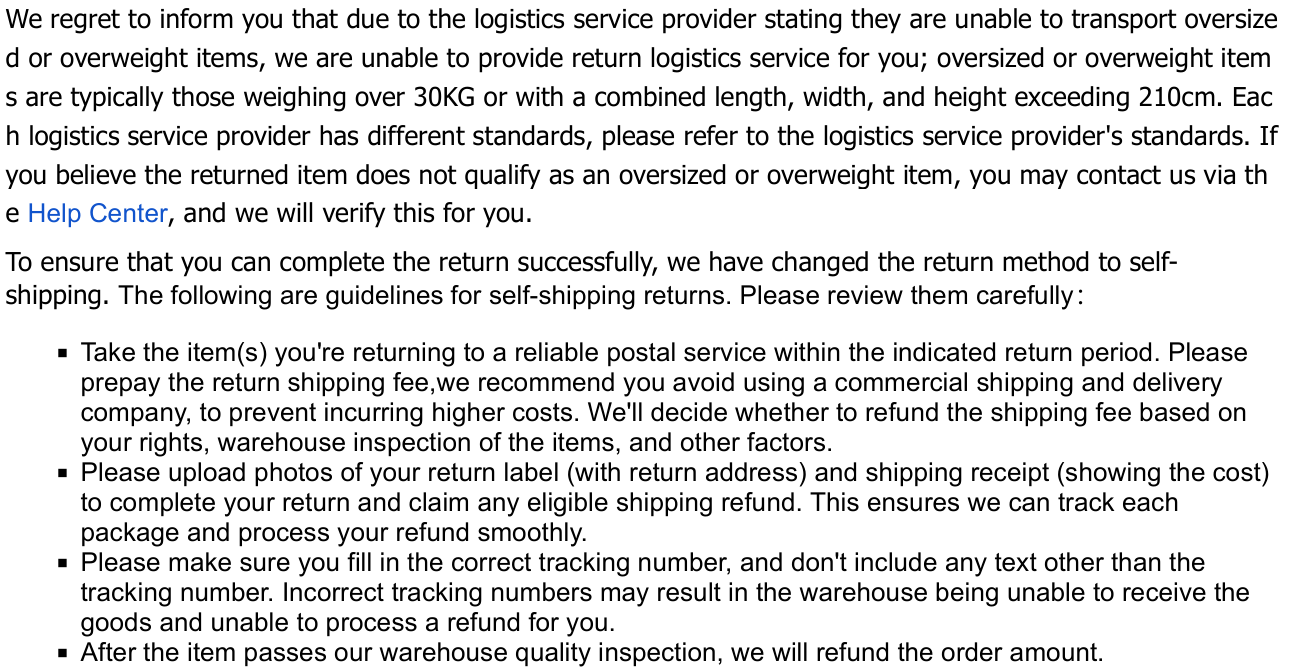
On July 23, AliExpress changed my return to self-shipping, saying its logistics provider could not transport oversized or overweight items. I am reporting the explanation I received, without making a claim about the parcel’s exact weight, dimensions or eligibility under a carrier’s limits.
The instructions required me to prepay return postage, upload the return label and receipt, and provide tracking. Shipping reimbursement would be decided based on rights, inspection and other factors. The immediate payment and arrangements had become my responsibility. Whether I would get that shipping money back was left conditional. That distinction matters: the messages do not establish that the seller’s ultimate responsibility was formally cancelled, but they do establish that I was being asked to fund the return first.
To me, a “free return” promise loses its value when I have to pay first and then argue about getting the postage back after returning the product. That is my criticism of how my shoe-return reimbursement was handled, and why I did not want to repeat the process with Samuel.
After the separate shoe-return experience, I did not want to pay first and then face another argument about whether my shipping evidence was adequate. I wanted a practical return arrangement that did not leave me advancing more money to resolve a problem with the item.
In my replies, I requested a funded pickup or a refund without return; a later reply also proposed full-value store credit as an alternative. These were requests, not resolutions I can say were granted. On July 25, AliExpress still described a return-and-inspection process and said it could consider a partial refund if valid evidence supported an inability to return. Later that day, it said it had not received valid evidence. I followed up again on July 31. Sending an evidence link and having that evidence accepted are separate events.
The PayPal timeline continued beyond July
The payment-provider record matters because stopping at the first denial would leave out later developments. Dates below use Eastern Time, my local timezone; some original PayPal headers use Pacific Time.
- July 24: PayPal denied the case, saying it had been filed more than 30 days after delivery. I challenged that reason in my reply, reporting that I had received the item on July 21.
- July 30: Another PayPal notice denied the case on the stated basis that it did not meet its qualification for a billing dispute.
- August 1: PayPal acknowledged receiving my appeal. This acknowledgment is evidence of an appeal being received, independent of the drafted appeal letters in my files.
- August 12: PayPal said it had changed the case reason and described the claim as an item or service significantly different from its description.
- August 20: PayPal relayed a conditional refund offer requiring a return and uploaded tracking by August 30. The message assigned return costs to me. An offer with conditions is not a completed refund.
- August 21: PayPal thanked me for providing tracking information and said it had shared that information with the merchant. The email does not identify the tracking number or prove that the parcel was accepted by a carrier or delivered back.
- September 10: The latest denial located says the requested tracking details were not provided. That sits uneasily beside the August 21 acknowledgment. The available records do not explain whether PayPal wanted additional or different tracking evidence.

Separately, AliExpress’s August 10 email said its dispute had ended and directed me to the order page for the result. The email itself does not state a refund amount or explain the closure. I will not turn that notification into a conclusion it does not establish.
Where I ended up
As of September 23, I have not received my money back. Fortunately, I was able to fix the plush. I am glad I could make something of the purchase, but that was my own resolution of the item problem—not a refund or repair arranged by AliExpress or PayPal.
I am not presenting a repair tutorial or claiming that the same fix would work for another toy. This article is about the condition I reported, the return process I was given, and the outcome I can now confirm.
What I would keep in a return-dispute file
My practical takeaway is to keep the listing, item-condition evidence, delivery record, return instructions and payment decisions together, while keeping each source’s limits clear.
- Save the condition promise. For a blind-box collectible, sealed packaging can be part of what you are buying. Preserve the actual wording and the date you saved it.
- Label photos and video honestly. A later condition video can still be useful. Calling it an unboxing recording would undermine the evidence.
- Save the return instructions. Keep the deadlines, required documents and any conditions attached to shipping reimbursement.
- Separate each step. A return instruction, a tracking acknowledgment, an appeal acknowledgment and a refund credit establish different things.
- Keep contradictory notices. The August tracking acknowledgment and September denial belong in the same file. Neither should disappear just because the other is easier to summarize.
For me, the main problem was being asked to pay upfront for a return I understood should be seller-paid, after my separate shoe return had already shown me how disputed shipping evidence could complicate reimbursement. This record supports that experience. It does not establish how every AliExpress seller or every PayPal dispute is handled.
This Samuel case is separate from my AliExpress shoe-return postage dispute. The orders, evidence and payment questions should not be combined.
Evidence and updates: This article was checked against the original saved documents, recovered condition media and matching account emails. Exhibits omit private identifiers and are linked only to their permanently cropped public versions. A later decision, verified return delivery or confirmed refund will trigger a dated update. Read more on the Shopping Guru PhD Blog.
Editorial promise: Recommendations remain independent. Affiliate links may earn Shopping Guru PhD a commission at no added cost to you.